




Whale Shark Galapagos: where and when to see the ocean’s gentle giant
The giant of Galapagos: everything about the Whale Shark
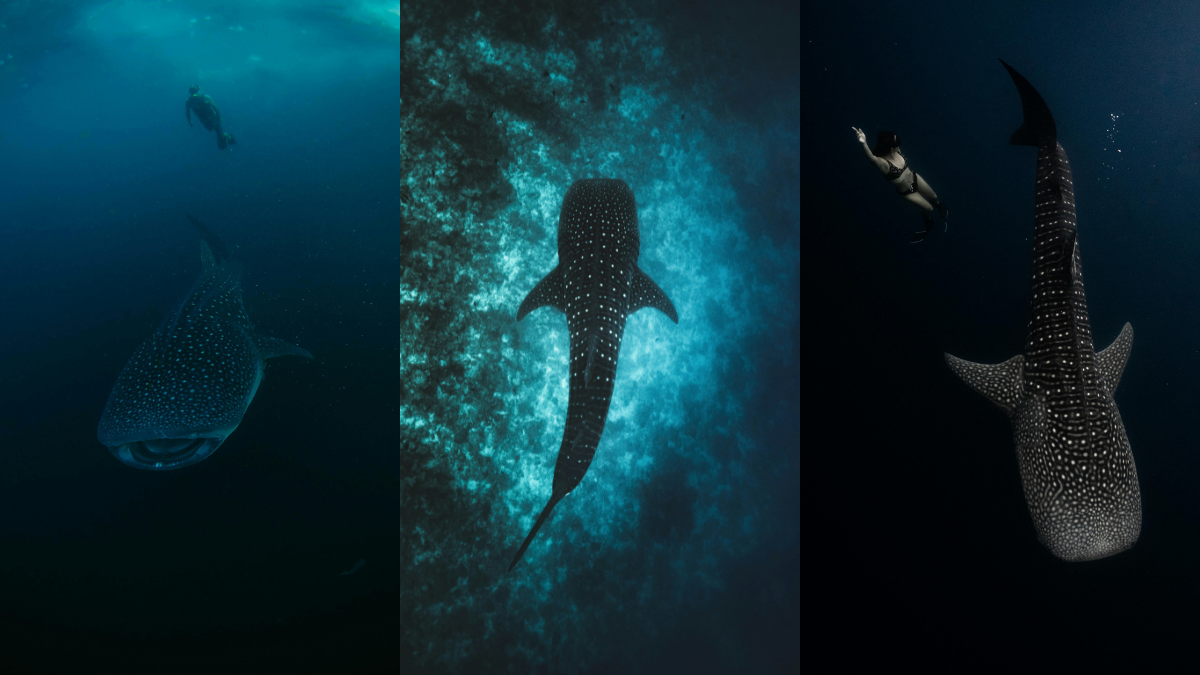
Imagine being suspended in the deep blue of the Pacific, surrounded by the silence of the ocean, when suddenly a massive shadow begins to materialize from the abyss. It’s not a boat, nor a submarine; it is the Whale Shark, a titan of the depths that visits the Galápagos Islands to remind us how small we are in the face of nature’s majesty.
With its skin adorned with a “starry” pattern of white spots and a rhythmic, hypnotic movement, this gentle giant (Rhincodon typus) has chosen the archipelago’s marine sanctuary as one of its most important gathering spots on the planet. Unlike other parts of the world where juveniles are common, Galápagos offers a unique phenomenon: here, the stars are massive adult females, many of them apparently pregnant, crossing these waters on a migratory mission that still challenges scientific understanding.
At Galápagos Center, we know that spotting this colossus isn’t just a tourist activity; it’s a life-changing experience.
Where to Find the Giant? The Importance of Darwin Island
While the archipelago boasts hundreds of observation points, one location stands above the rest: Darwin Island. Located in the far north, it is considered one of the best places on Earth for sighting marine megafauna.
It is believed that Whale Sharks use the waters around the world-famous “Darwin’s Arch” (now known as Darwin’s Pillars) as a resting or navigation point on their migratory routes. Being there, surrounded by hundreds of hammerhead sharks while a Whale Shark glides right in front of you, is the pinnacle of the Galápagos experience.
When is the Best Time of Year for Sightings?
Although the Galápagos Islands are a breathtaking destination 365 days a year, the Whale Shark follows a very specific calendar. To ensure an encounter, we must synchronize our journey with the ocean’s cycles.
- The Peak Season: The primary window is during the “garúa” or cool season (June to December).
- The Best Months: Between August and October, the Humboldt Current brings a high concentration of nutrients and plankton, attracting these giant females to the northern waters.
- Water Conditions: Temperatures range between 18°C and 23°C (64°F – 73°F). A high-quality wetsuit (5mm to 7mm) is essential for enjoying long sessions of observation.
Diving Cruises: The Only Way to Experience This Adventure
Due to the remote distance of the northern islands, the only legal and safe way to reach Darwin and Wolf is via specialized Diving Cruises (liveaboards).
These cruises are specifically designed for explorers seeking total immersion in the marine sanctuary. By choosing this option with Galápagos Center, you ensure not only access to the most exclusive dive sites but also the guidance of expert divemasters who understand the animal’s behavior, maximizing your chances of an encounter on every dive.
A Responsible Diving Experience
Diving with the largest fish in the world is an activity that requires preparation and deep respect for the environment. During your dive, remember that we are guests in their home:
- Maintain Distance: Keep at least 3 to 4 meters (10-13 feet) of separation.
- Do Not Obstruct: Never swim directly in front of the animal to avoid altering its course.
- Ethical Photography: Enjoy the spectacle without trying to touch the shark, and avoid using powerful flashes that might cause stress.