


Whale Watching in Ecuador
A Once-in-a-Lifetime Trip
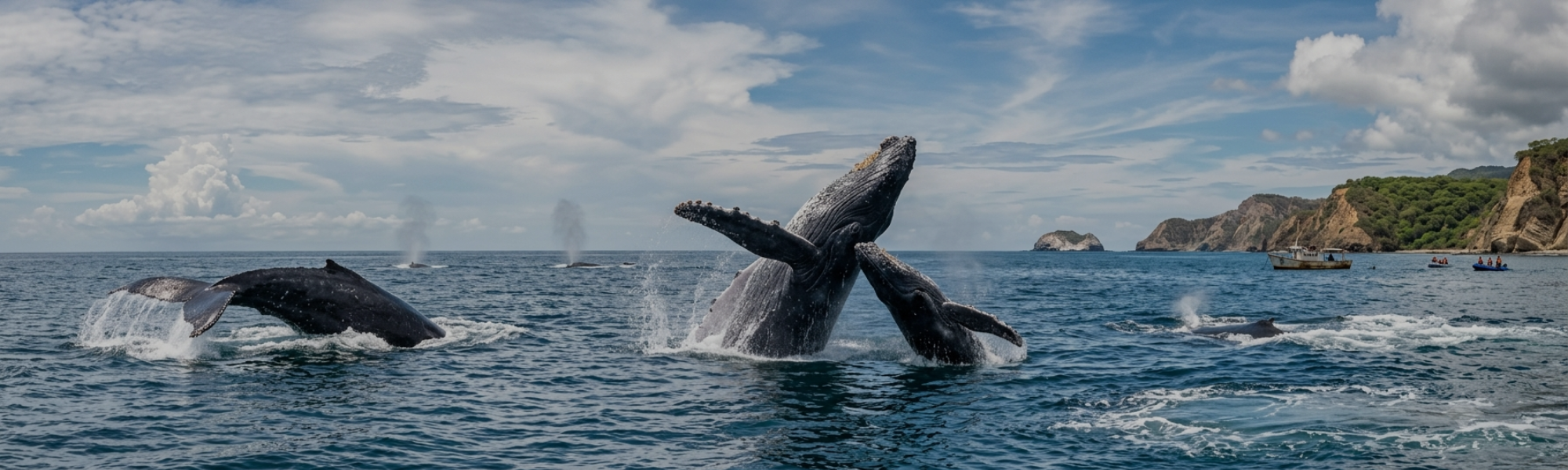
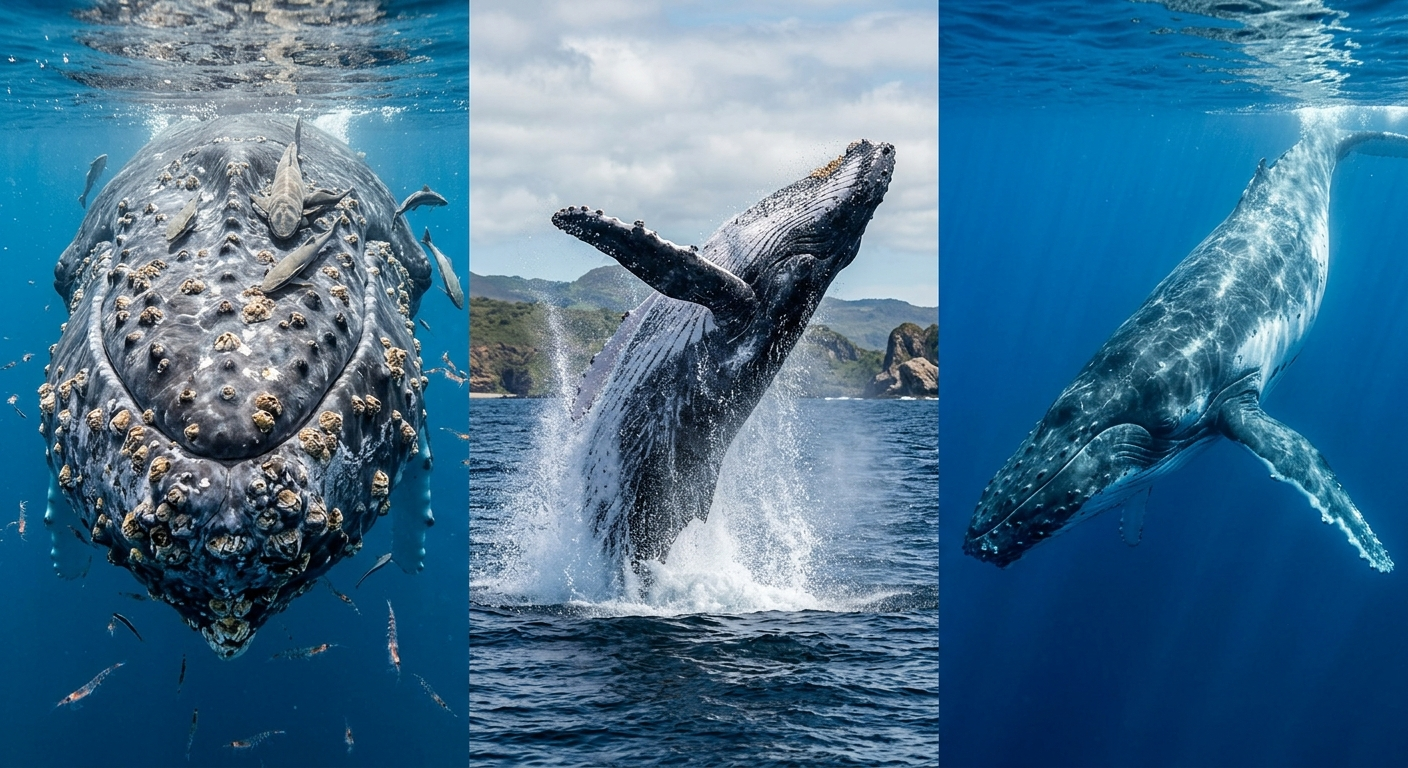
Imagine this: a humpback whale launches itself out of the water, just a few meters away. There’s no replay. There’s no slow motion. Instead, you witness nature at its most extraordinary, live and unrepeatable.
This season, therefore, give yourself something unforgettable: a face-to-face encounter with one of the ocean’s most magnificent creatures in Ecuador.
Why Ecuador Is One of the Best Places for Whale Watching
Every year, thousands of humpback whales travel more than 8,000 kilometers from the cold waters of Antarctica. Consequently, they arrive in Ecuador’s warm Pacific waters ready to mate, give birth, and raise their calves.
From June to September, Ecuador becomes one of South America’s premier whale-watching destinations. During this period, the nutrient-rich coastal waters offer perfect conditions for newborn calves. As a result, families and travelers gain a rare front-row seat to one of nature’s greatest migrations.
Top Whale-Watching Destinations in Ecuador
Several coastal spots stand out for their consistent sightings:
•Puerto López
•Machalilla National Park
•Isla de la Plata
•Salinas
•Manta
At these locations, visitors can witness spectacular breaches, tail slaps, and fin waves. Additionally, many boat tours let passengers hear the haunting songs of male whales echoing beneath the surface.
The Best Time to See Humpback Whales in Ecuador
The whale season generally runs from June through September. However, peak sightings typically occur during July and August, when whale activity reaches its highest point.
During these two months, travelers have excellent chances of witnessing multiple behaviors at once. For example, breaching, tail slapping, and mother-calf interactions all become common. Because of this narrow window, early booking is essential for the best boat placement.
Incredible Humpback Whale Facts Most People Don’t Know
Beyond the thrill of watching, humpback whales carry a fascinating biology. Here are four facts that make the experience even more meaningful.
They Sing the Longest Songs in the Animal Kingdom
Male humpback whales produce songs that can last up to 30 minutes. Furthermore, they repeat these songs for hours at a time. Interestingly, all males in the same region gradually change their songs together, almost like a cultural trend passing through the population.
Whale Calves Grow at an Astonishing Rate
A newborn humpback whale can drink nearly 600 liters of milk every day. Meanwhile, it can gain up to 45 kilograms daily during its first months of life. This rapid growth, in fact, prepares the calf for the long migration ahead.
They Can Communicate Across Vast Distances
Researchers believe whale vocalizations can travel hundreds of kilometers underwater. According to NOAA Fisheries, sound moves efficiently through water, whales can coordinate and communicate over remarkable distances. This ability, therefore, plays a key role in their social structure.
They Remember Migration Routes for Decades
Humpback whales follow some of the longest migration routes on Earth. Despite traveling thousands of kilometers, they return to the same breeding grounds year after year with astonishing precision. Scientists still study how they manage this feat.
Why This Season Is the Perfect Time for This Adventure
As the songs of humpback whales echo through Ecuador’s Pacific waters, they remind us to slow down. They also invite us to reconnect with nature and cherish the moments that truly matter.
This season, celebrate with an experience beyond ordinary getaways. Instead of another routine trip, seek out wonder, adventure, and memories that last far longer. Whether you travel with family, friends, or on your own, Ecuador’s whale season delivers a rare opportunity to witness nature’s greatest spectacle.
So, while the world gets ready for the FIFA World Cup 2026, why not create your own extraordinary story? The ocean is calling, the whales are waiting, and Ecuador is ready to welcome you.