


Cacao Pollination
Meet Forcipomyia, the Tiny Insect Behind Chocolate.
When we think about cacao, we usually imagine the tree, its colorful pods, or the chocolate made from its beans. However, cacao pollination depends on an actor almost invisible to the human eye: the tiny midge of the genus Forcipomyia. This minuscule insect plays a leading role in the journey from flower to cacao pod.
What Is Forcipomyia?
Forcipomyia is a genus of very small flies, commonly called biting midges or cacao midges. These insects belong to the family Ceratopogonidae, within the order Diptera. They measure only 1 to 3 millimeters, yet their ecological importance can be enormous.
The genus contains many species, and not every one pollinates cacao. Some members of the family can bite animals. Nevertheless, cacao-associated Forcipomyia matter mainly for their role as pollinators.
Why Is Forcipomyia So Important for Cacao Pollination?
The cacao tree (Theobroma cacao) produces thousands of tiny flowers. Only a relatively small share of them develops into mature pods. The flower’s structure explains why: its pollen is sticky, and its reproductive parts are hard to reach.
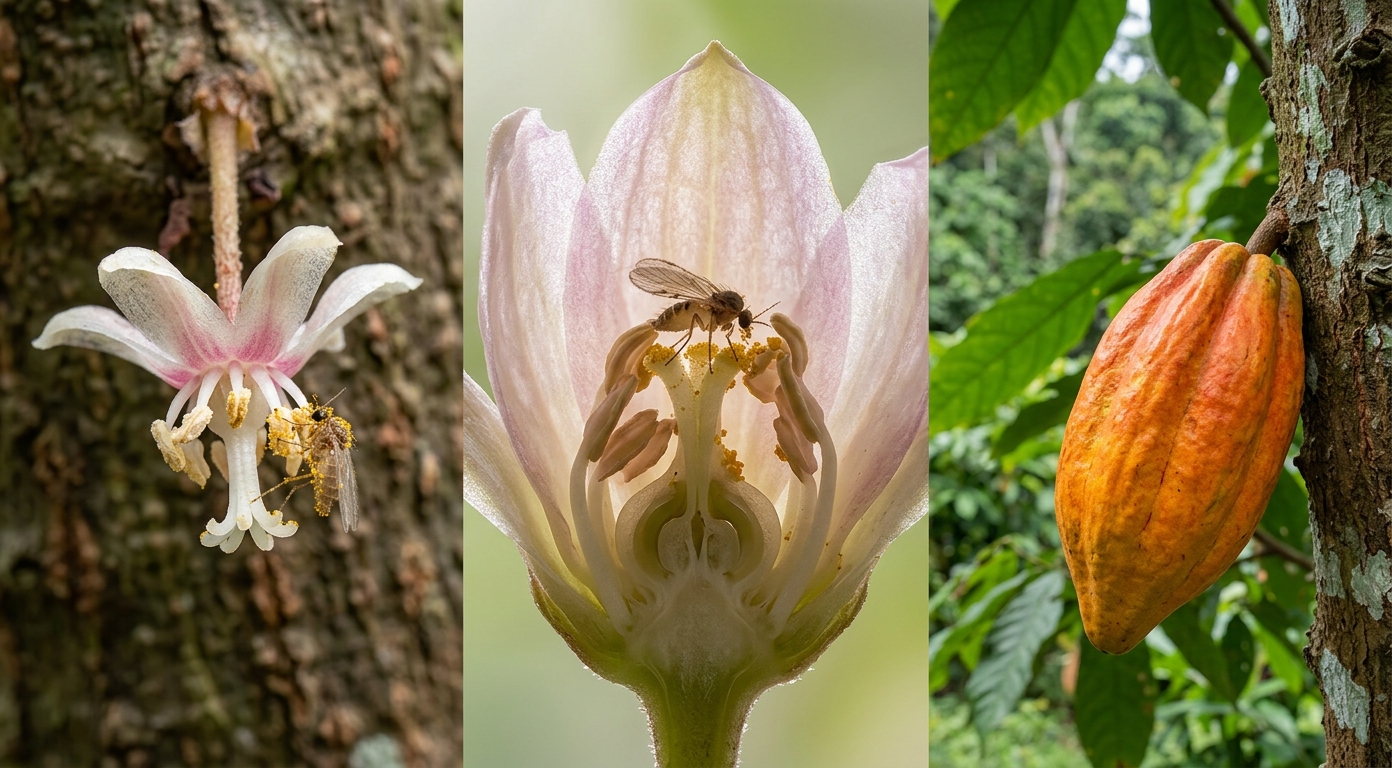
As a result, wind and water cannot move cacao pollen effectively, so insects become essential. Research using detailed flower measurements shows that Forcipomyia can fit through spaces that larger insects cannot easily access. In simple terms, the process works like this:
- The midge visits a cacao flower.
- Pollen attaches to its body.
- The midge visits another flower.
- Pollen reaches the stigma, and fertilization can occur.
- A cacao pod can begin developing.
How Does Cacao Pollination Work?
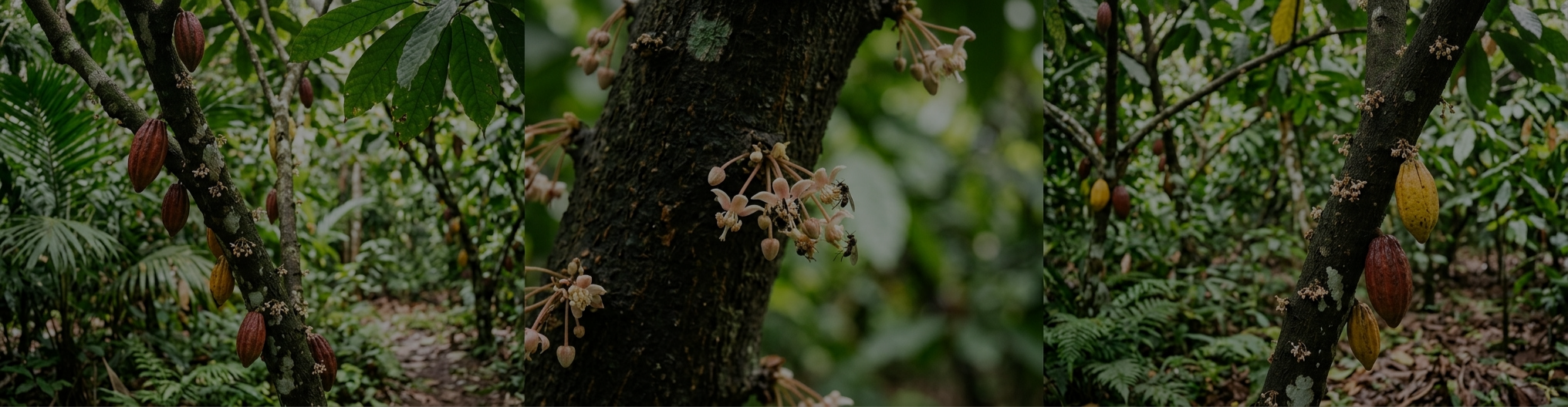
Cacao flowers grow directly from the trunk and larger branches, a phenomenon known as cauliflory. They are extremely small and contain several structures that block access. For example, the pollen-producing anthers sit behind structures called staminodes.
Therefore, the insect must reach exactly the right parts of the flower. Studies suggest that insects around 1 to 3 mm long suit this structure particularly well.
Moreover, a 2026 study published in ScienceDirect provided new behavioral and pollen-based evidence. It supports Ceratopogonidae, especially Forcipomyia, as the strongest candidates for effective cacao pollination. The research also found that hotter and drier conditions can reduce pollination-compatible activity.
Where Do These Insects Live?
Forcipomyia does not live exclusively on cacao flowers. Adults visit the flowers, but they do not complete their whole life cycle there. Research indicates that Ceratopogonidae can use other resources, including sugar sources, while their immature stages depend on moist organic habitats.
Consequently, a productive cacao farm needs more than cacao trees. It also needs the conditions that let these tiny insects reproduce and survive.
What Does Forcipomyia Need to Survive?
Farmers can influence the habitat available to these insects. According to Ecuador’s INIAP, humid environments rich in organic matter help support cacao pollinators. Suitable materials include:
- Leaf litter
- Banana pseudostems
- Cacao husks
- Other decomposing organic material
Additionally, agroforestry systems, appropriate shade, and adequate humidity help maintain favorable conditions. You can read more in INIAP’s publication on the recognition, importance, and care of pollinators in cacao systems.
Forcipomyia and Sustainable Cacao Production
The relationship between cacao and Forcipomyia shows that agriculture depends on a whole ecosystem, not only on the crop. A cacao plantation includes cacao trees, shade trees, leaf litter, soil organisms, pollinating insects, birds, and other wildlife. All of these components can interact with one another.
INIAP’s 2026 technical publication highlights the importance of conserving pollinator habitat. It identifies humidity, organic matter, regulated shade, and reduced reliance on agrochemicals as key factors.
Why Excessive Disturbance Can Be a Problem
Because Forcipomyia needs particular conditions, farming practices can affect its abundance. Removing organic material, disturbing the soil excessively, or eliminating shade can reduce its habitat.
This does not mean every insect on a cacao farm is beneficial, or that all agricultural chemicals have the same effects. Rather, it shows why farms should conserve the organisms that provide important ecosystem services. Research also shows that precipitation, temperature, and humidity influence pollination activity.
Forcipomyia in Ecuador
Forcipomyia is especially relevant to Ecuador because cacao is one of the country’s key agricultural products. Studies have documented cacao-associated Forcipomyia and other Ceratopogonidae in Ecuador. According to earlier Ecuadorian research, the insect appears in major cacao-producing areas, including the Coast and Amazonia.
Ecuador’s production includes both Nacional/Fino de Aroma cacao and CCN-51. Pollination by small dipterans matters for both systems. Furthermore, recent research on Neotropical dipteran pollinators continues to identify Forcipomyia and other small flies as important components of cacao pollination.
Is Forcipomyia the Only Cacao Pollinator?
No. Forcipomyia is one of the best-known and most important cacao pollinators, but researchers have documented other visitors. These include other Ceratopogonidae, other small flies, and, depending on the region, some bees and other insects.
However, visiting a flower does not automatically make an insect an effective pollinator. The 2026 study mentioned above compared insects that merely visit cacao flowers with those that have traits compatible with effective pollination. It found that Forcipomyia midges were among the strongest candidates.
From Midge to Chocolate: The Full Chain
The connection between this tiny insect and your favorite treat follows a clear chain:
- Forcipomyia pollinates the cacao flower.
- Fertilization occurs.
- The cacao pod develops.
- The pod holds the cacao beans.
- Fermentation and drying prepare the beans.
- The beans become chocolate.
Of course, the insect does not produce chocolate directly. Still, without successful pollination, the tree cannot produce the pods that contain the seeds used to make chocolate.
Why This Matters for Ecotourism and Cacao Experiences
For cacao tourism, Forcipomyia offers a great way to explain the hidden side of chocolate. Visitors often see the pod, taste the pulp, and learn about fermentation. But they rarely hear about the insects responsible for an important step before the pod even exists.
Introducing this midge lets a cacao experience tell a larger story about biodiversity, natural pollination, sustainable agriculture, agroforestry, soil ecosystems, and conservation. It also demonstrates a key ecotourism idea: sometimes the most important organisms are the ones visitors can barely see.
A Tiny Insect With a Huge Role
Forcipomyia may measure only a few millimeters, but it shows how interconnected tropical ecosystems are. Chocolate production begins long before harvest, in a living ecosystem where flowers, insects, soil, humidity, vegetation, and farmers interact.
Protecting cacao pollinators therefore means protecting more than a single insect. It means maintaining the conditions that let cacao production work naturally. In the end, one of the smallest inhabitants of the cacao farm can have one of the biggest influences on one of the world’s most famous foods.
Important scientific note: Forcipomyia is a genus, not a single species. Different species occur in different regions, and not every species should automatically count as an effective cacao pollinator. Current research increasingly focuses on identifying the particular species and ecological conditions behind effective pollination.