

Historic Landmarks in Ecuador
5 Iconic Monuments & Legends
Have you ever imagined standing with one foot in the Northern Hemisphere and the other in the Southern Hemisphere? Or seeing the only winged statue of the Virgin Mary in the world? What about visiting an ancient Inca temple built with stones fitted so perfectly that not even a knife blade can pass between them?
Ecuador is home to incredible historic landmarks filled with history, legends, and fascinating facts. Each one, therefore, reflects a different chapter of the country’s past and showcases the rich cultural heritage that makes Ecuador unique.
In this blog, you’ll discover five of Ecuador’s most iconic landmarks. Additionally, you’ll learn how they were built, explore the legends surrounding them, and uncover surprising facts that continue to inspire visitors from around the world.
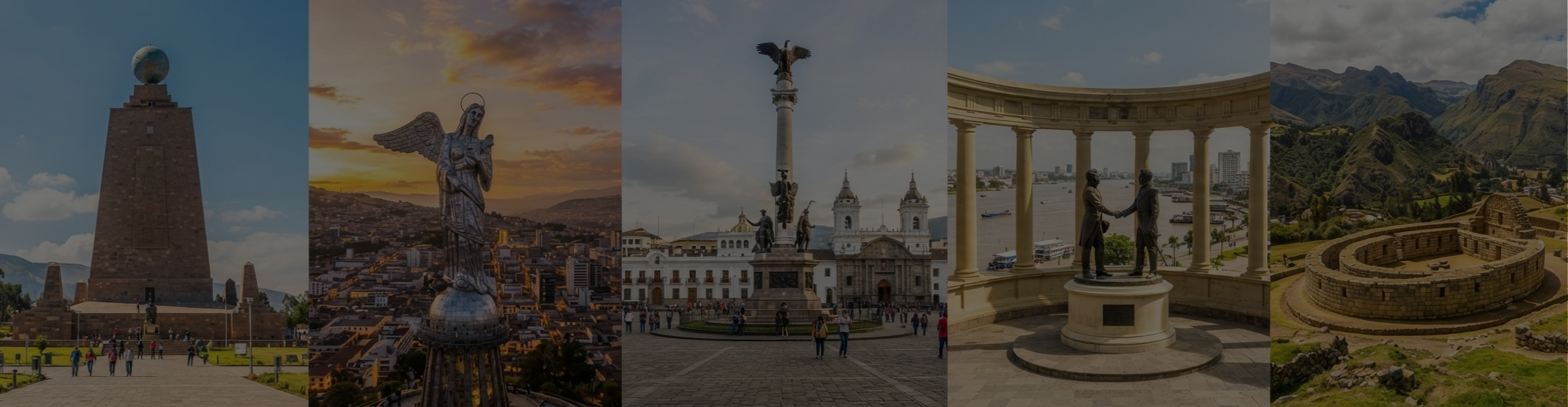
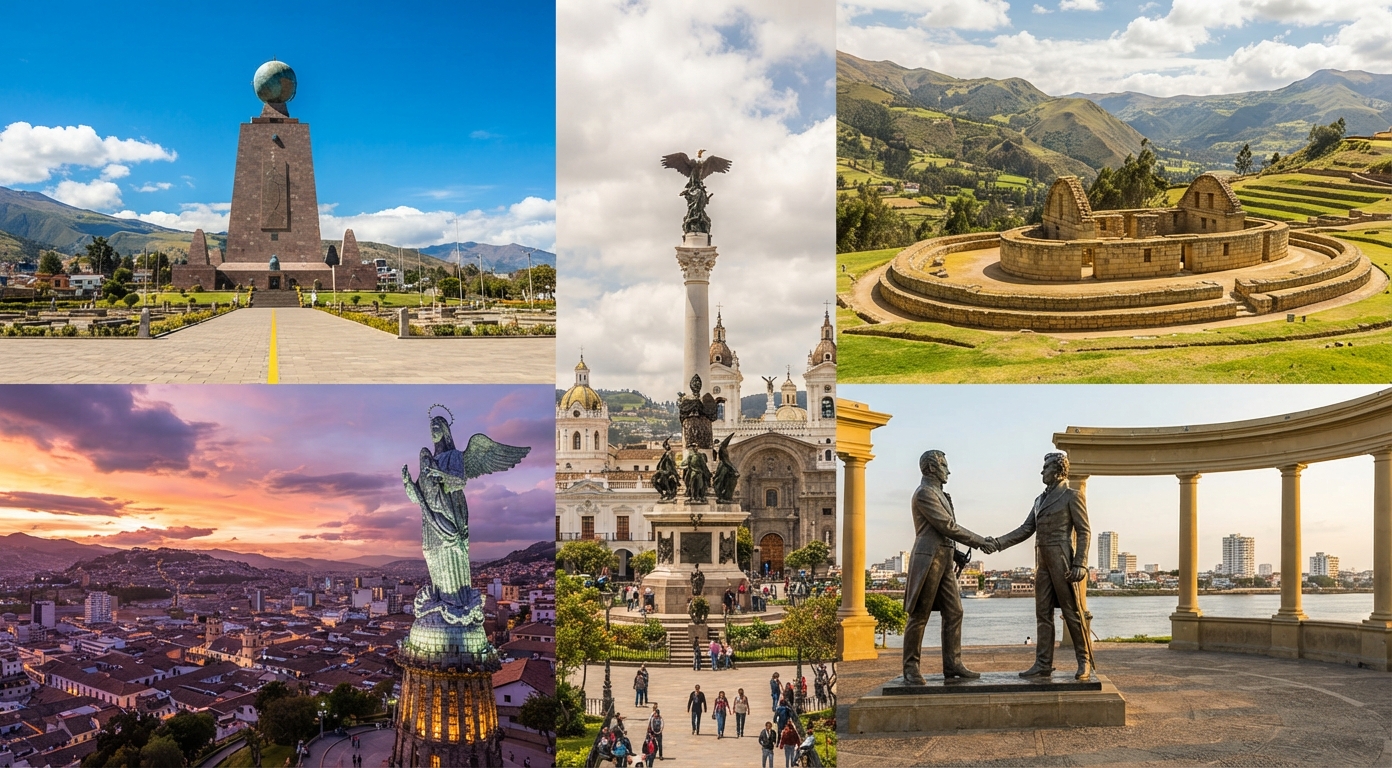
The Middle of the World Monument: Standing on the Equator
Have you ever wanted to stand in two hemispheres at the same time? At the Middle of the World Monument, you actually can.
The story of this famous landmark began in 1736, when the French Geodesic Mission arrived in Ecuador. Their goal was to measure the Earth and identify the exact location of the Equator. The monument visitors see today, however, was built between 1979 and 1982 to honor this scientific achievement.
But science isn’t the only thing that makes this place special. According to local tradition, Indigenous communities had already identified the Equator centuries earlier. They did so simply by observing the Sun’s shadows from Catequilla Hill.
Visitors also enjoy fun experiments, such as balancing an egg on the head of a nail. Every year, thousands of travelers come to experience one of Ecuador’s most famous attractions, where science, history, and culture come together.
The Virgin of El Panecillo: Quito’s Guardian
Watching over the city from the top of El Panecillo Hill, this impressive statue has become one of Quito’s best-known landmarks. Opened in 1976, it was inspired by the famous Virgin of Quito, created by Ecuadorian artist Bernardo de Legarda.
What makes this monument truly unique, in fact, is that it’s believed to be the only large statue of the Virgin Mary with angel wings anywhere in the world. Local legend adds another layer of mystery: beneath the hill, a hidden golden palace supposedly lies protected by an Inca princess.
Another fascinating fact is that the monument is made of 7,400 aluminum pieces, carefully assembled like a giant puzzle. From the viewpoint, moreover, visitors can enjoy breathtaking views of Quito and its Historic Center, a UNESCO World Heritage Site.
The Independence Monument: A Symbol of Freedom
Located in Plaza Grande, in the heart of Quito, the Independence Monument was inaugurated in 1906. Its purpose was to honor the heroes of Ecuador’s First Cry of Independence on August 10, 1809.
Every part of the monument carries symbolic meaning. The condor breaking its chains represents freedom, while the lion symbolizes the end of Spanish colonial rule. According to one popular local story, the Statue of Liberty on top was turned so she would no longer face the Presidential Palace.
Another interesting fact is that every piece of the monument was crafted in Italy. Consequently, workers had to transport each piece across the Andes to reach Quito. Today, the monument hosts important national ceremonies and reminds visitors of the courage behind Ecuador’s independence.
The Hemicycle of La Rotonda: Where History Changed South America
Located along Guayaquil’s beautiful waterfront, the Hemicycle of La Rotonda commemorates the historic meeting between Simón Bolívar and José de San Martín in 1822. Although historians still debate exactly what the two leaders discussed, their meeting played a key role in South America’s independence.
The monument is also known for an interesting local legend. Many visitors claim that its curved columns create an acoustic effect, allowing whispers to travel clearly from one side to the other.
With the Guayas River as its backdrop, La Rotonda remains one of Guayaquil’s most photographed landmarks. Its elegant architecture, therefore, stands as a lasting reminder of the city’s role in Latin America’s fight for freedom.
Ingapirca: Ecuador’s Greatest Archaeological Treasure
Hidden in the mountains of Cañar Province, Ingapirca is Ecuador’s largest and most important archaeological site. Originally built by the Cañari people, the complex was later expanded by the Incas.
The site stands out for its enormous stone blocks, perfectly fitted together without any mortar. According to local legend, a magical golden tapir appears during full moon nights to protect the ancient ruins.
One of Ingapirca’s greatest wonders is the Temple of the Sun. Remarkably, it was carefully designed to align with the solstices, revealing the advanced astronomical knowledge of its builders.
Walking through Ingapirca, therefore, offers visitors a unique opportunity to explore Ecuador’s Indigenous history. Today, it remains one of the country’s greatest historical treasures, admired by travelers from around the world.