



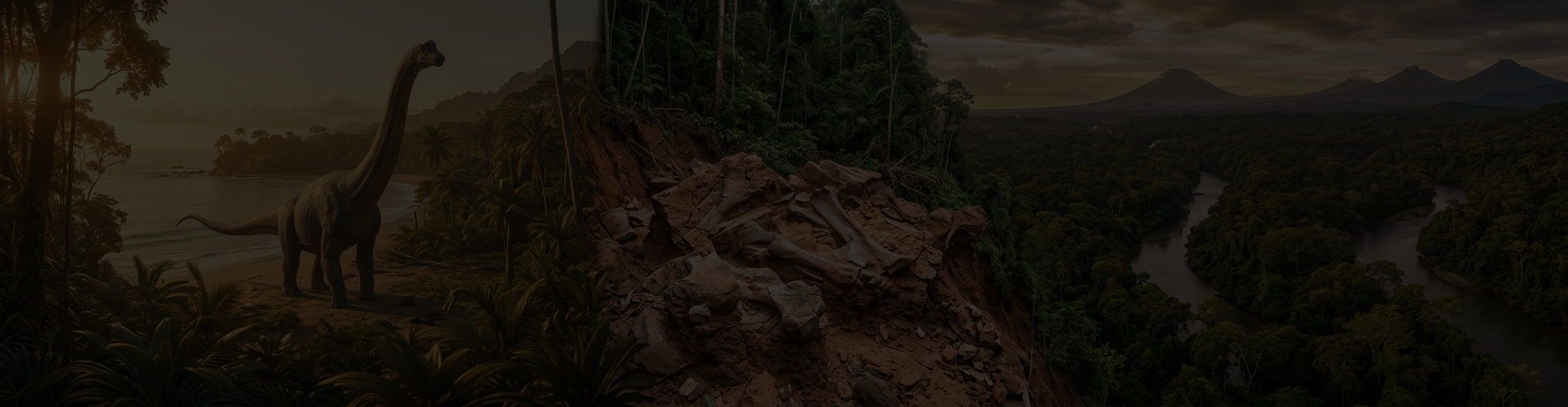
Dinosaur Found in Ecuador
First Dinosaur Found in the Ecuadorian Amazon
For millions of years, the Ecuadorian Amazon has concealed extraordinary secrets beneath its rivers, forests, and volcanoes. Today, however, one of those secrets has emerged: the first dinosaur in the Ecuadorian Amazon ever confirmed by scientists.
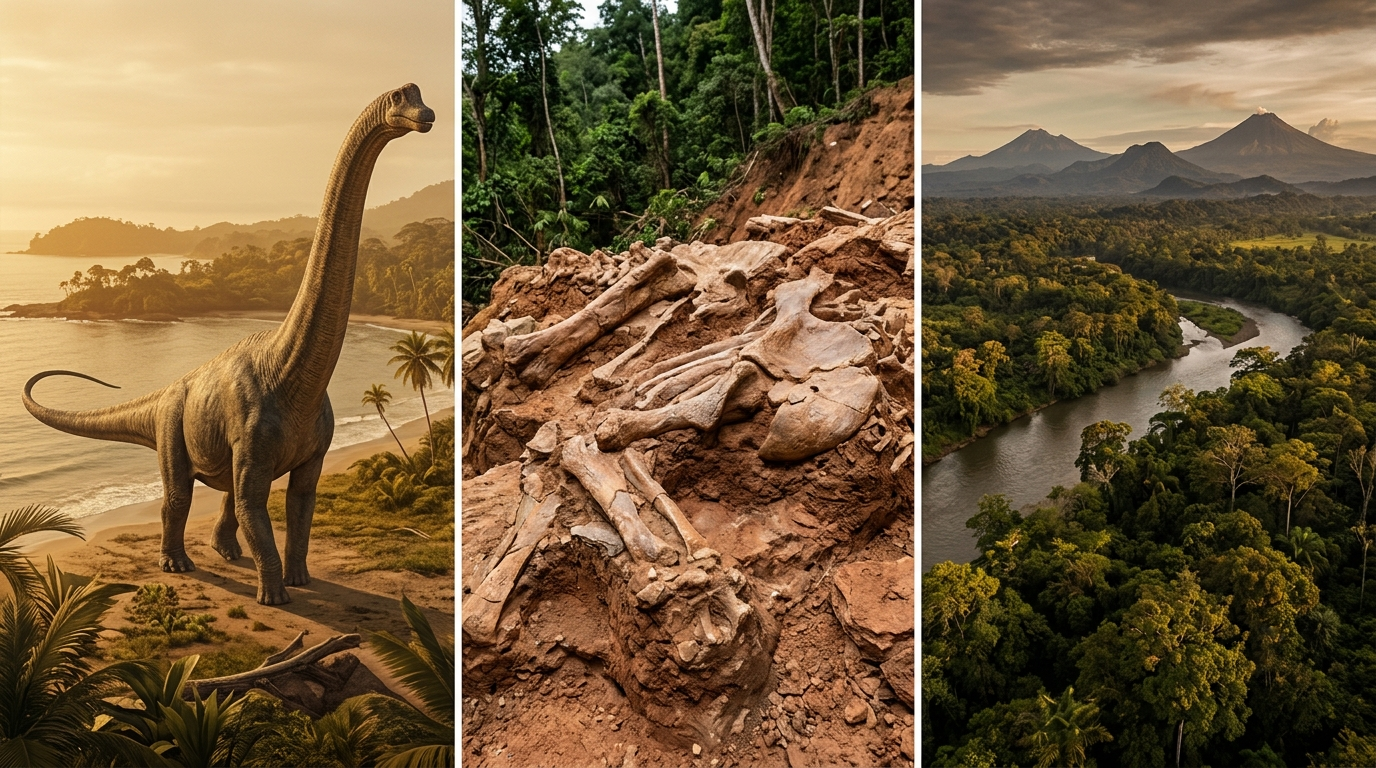
What began as the accidental discovery of massive bones exposed by a landslide has become the first dinosaur in the Ecuadorian Amazon ever confirmed by scientists.
Where the First Dinosaur in the Ecuadorian Amazon Was Found.
The discovery took place near Misahuallí, in Napo Province. There, residents of the Venecia Izquierda community uncovered fossil remains back in 2018.
After several years of research, a team from Ikiam Amazon Regional University confirmed the finding. Working alongside international specialists, they determined that the bones belonged to a titanosaur. This gigantic herbivorous dinosaur inhabited the region approximately 67 million years ago, during the Late Cretaceous period.
What Titanosaurs Looked Like
Titanosaurs were among the largest land animals ever to walk the Earth. They moved on four powerful legs and possessed remarkably long necks and tails. In fact, some individuals could reach lengths of several dozen meters.
Although these prehistoric giants roamed many parts of the world, this discovery confirms something new. They also lived in what is now the Ecuadorian Amazon—a landscape that looked vastly different millions of years ago than the tropical rainforest we know today.
Why This Finding Matters for Ecuadorian Science
This remarkable discovery marks a milestone for Ecuadorian science. Specifically, it represents the first dinosaur fossil ever documented in Ecuador’s Amazon Basin. Moreover, it stands as only the second officially recorded dinosaur fossil in the country’s history.
Beyond expanding our understanding of dinosaur distribution across South America, the find also provides valuable evidence. Researchers now have new clues about what Ecuador’s landscape looked like at the end of the Age of Dinosaurs. During that period, the region consisted of extensive coastal plains, with environmental conditions very different from those of today.
Meet “Wakrayampi”
The specimen has been informally named “Wakrayampi,” a name inspired by Amazonian cultural heritage. Researchers, meanwhile, continue to study the fossil to better determine its classification and unique characteristics.
Nevertheless, the discovery has already attracted international scientific attention. As a result, it highlights Ecuador’s tremendous potential for future paleontological research.
The Role of Local Communities
Beyond its scientific significance, this discovery also demonstrates the invaluable role of local communities. Without the curiosity and responsibility of the people who reported the fossil, these ancient remains might have remained buried for countless more years.
Thanks to the collaborative efforts of local residents, researchers, and universities, Ecuador has added a new chapter to its natural heritage. This finding, therefore, reminds us that many extraordinary stories are still waiting to be uncovered beneath our feet.