


Galapagos Penguin
The Only Penguin Living at the Equator
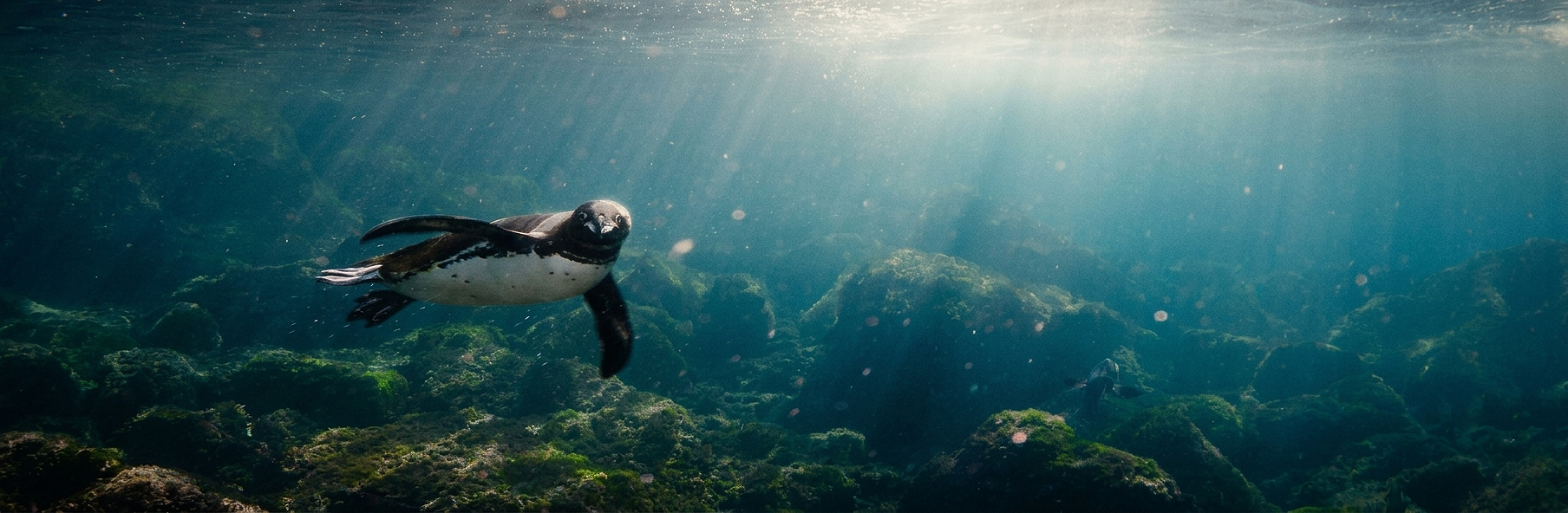
The sun illuminates the volcanic rocks of the Galapagos, home of the Galapagos Penguin —until a small figure emerges from the water and perches on a black rock.
It’s a penguin. For a few seconds, it surveys its surroundings. Then, it plunges back into the sea with surprising speed. That moment is enough to realize that the Galápagos never ceases to challenge what we believe is possible.
Why Does a Penguin Live at the Equator?
The Galapagos Penguin (Spheniscus mendiculus) is the only penguin species that lives naturally so close to the equator. Its presence in a warm climate seems like a mystery. However, the answer lies beneath the surface.
The cold Humboldt and Cromwell currents wash over the islands with nutrient-rich waters. As a result, these currents create the perfect habitat for the fish on which the penguin feeds. Without this cold-water system, in fact, the species could not survive so close to the equator.
How This Tiny Survivor Beats the Heat
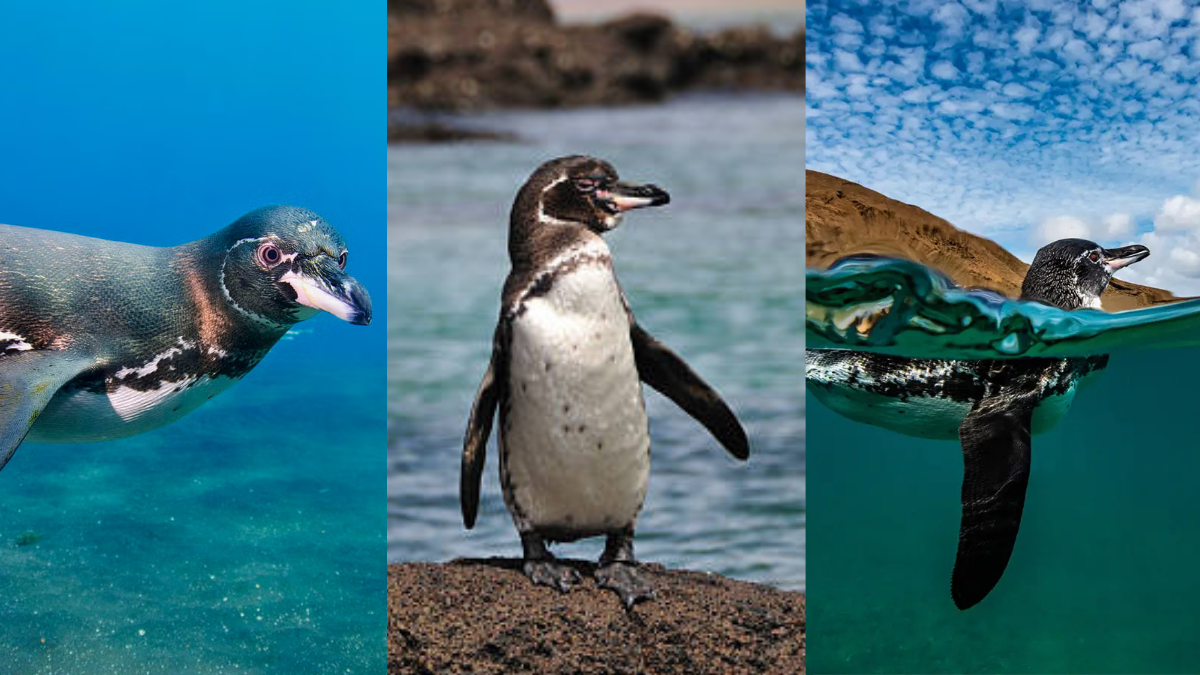
Standing just 45 centimeters tall, this tiny survivor has developed incredible adaptations to cope with the heat. For example, it rests in the shade of volcanic rocks whenever temperatures rise. Additionally, it spreads its flippers to release heat, much like a built-in cooling system.
Furthermore, it spends much of the day swimming in the refreshing ocean waters. Therefore, water becomes both its hunting ground and its natural air conditioning.
Where to See these Penguins
The best places to spot The Galapagos Penguin are Isabela and Fernandina Islands. There, they often share the landscape with marine iguanas, sea lions, and blue-footed boobies. Consequently, a single shoreline walk can reveal several endemic species at once.
However, encountering a penguin remains a privilege. This species is classified as Endangered by the IUNC, largely due to phenomena such as El Niño and other environmental changes. Because of this vulnerability, responsible tourism plays a key role in its conservation.
A Story of Adaptation and Resilience
Seeing a penguin under the Ecuadorian sun is much more than a wildlife encounter. Instead, it’s discovering a story of adaptation, evolution, and resilience that can only be told in the Galapagos.
At Galapagos Center, therefore, we design experiences so you can enjoy this moment responsibly. In this way, you connect with one of the most extraordinary species on the planet.